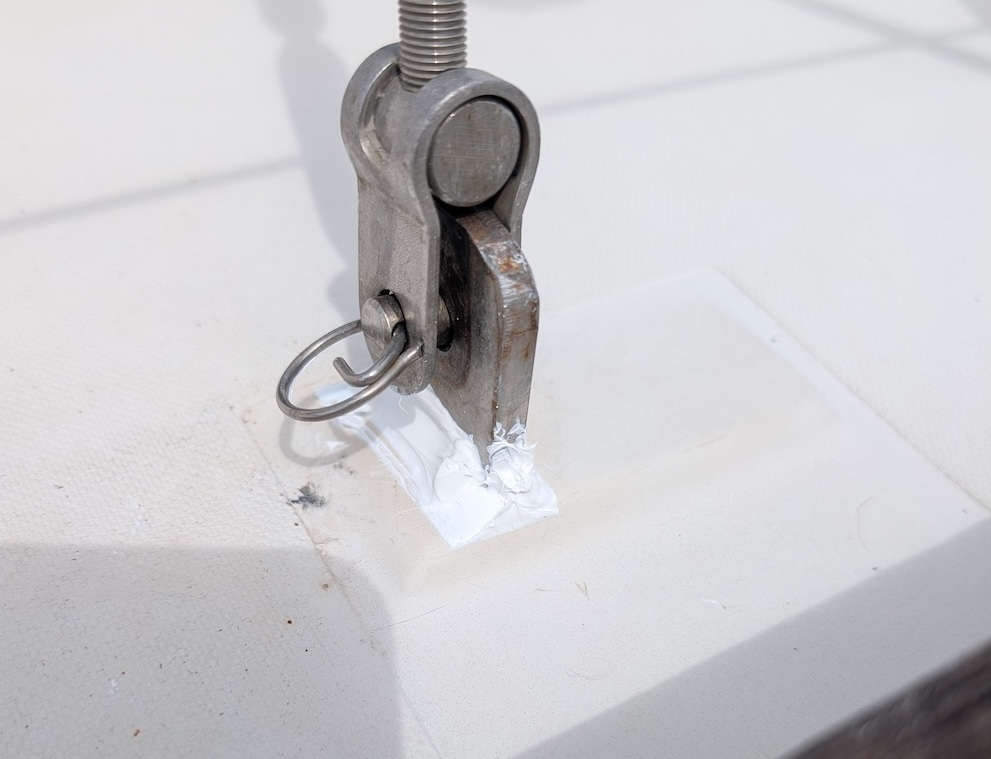
Chainplates connect the shrouds to the hull. In order to perform their function, they attach the shrouds, above the deck, to the hull frames, below the deck. Accordingly, most sailboats have pierced decks to let the chainplates through. This means that if they are not caulked, water can creep in around the chainplates.
Caulking around the chainplates avoids water ingress into the living space, but more importantly, it avoids the build up of corrosion on the chainplaites themselves. As they hold the mast in place, preventing corrosion cracks is part of maintenance that keeps the standing rigging safe. It prevents – in the worst cases – dismasting.
It took me the best of two afternoons to replace the caulking around the chainplates of two Contessa 32s. I detail below how I went about it.
Required material
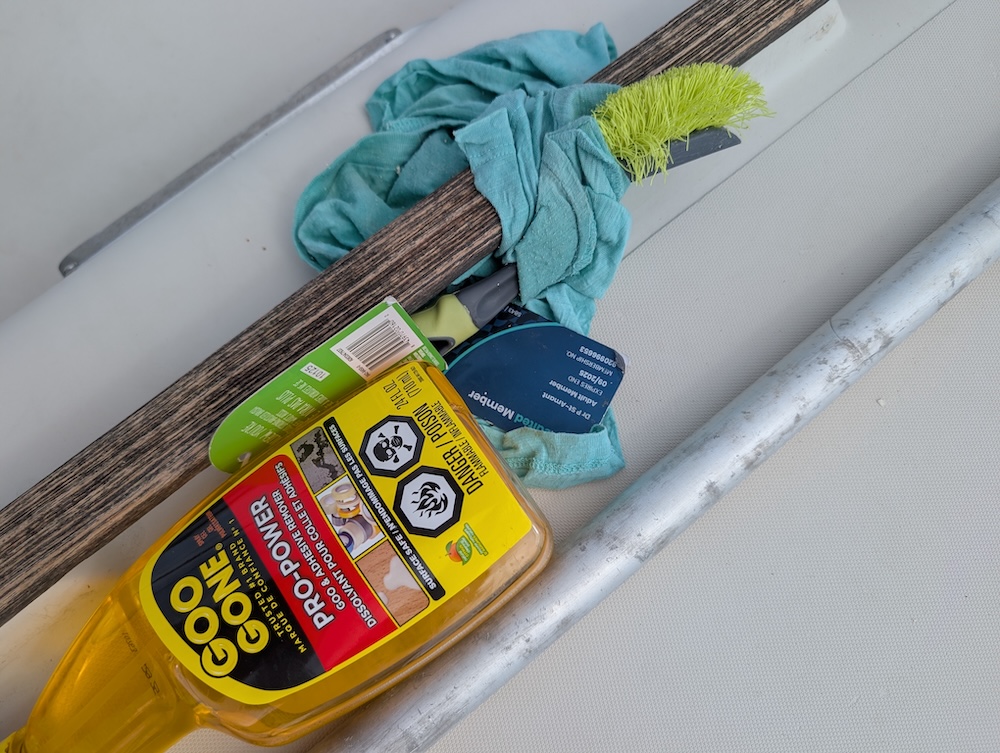
- Sikaflex (with a caulking gun);
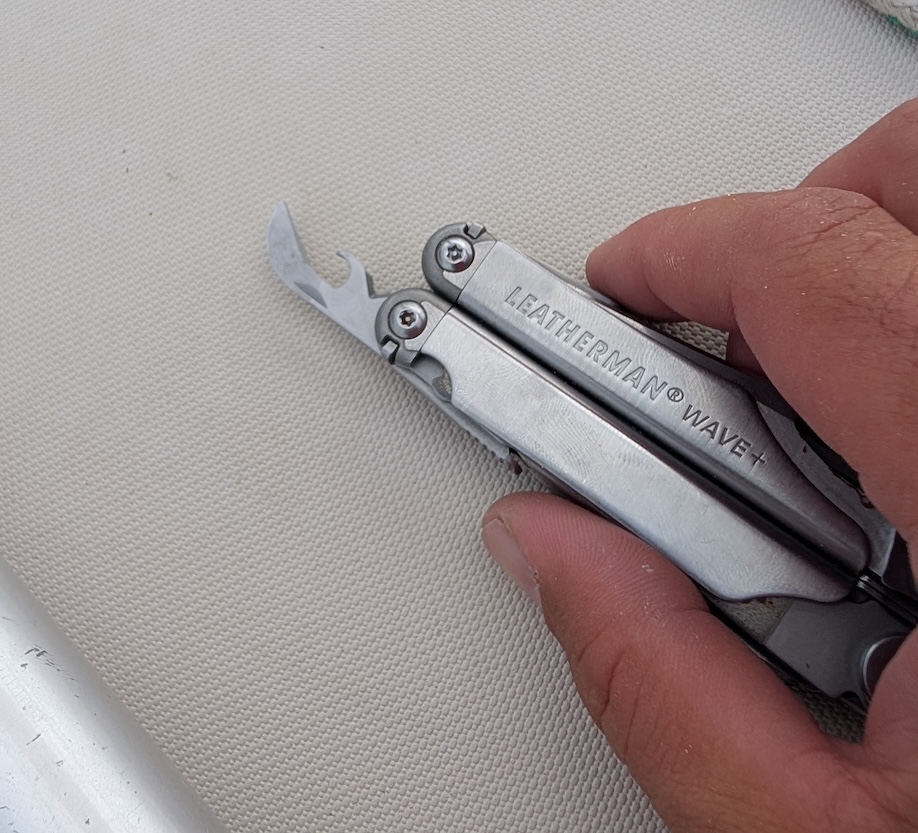
- Tools to scrape the old caulking. I used:
- the can opener on my leatherman;
- a plastic card;
- a brush.
- Painting tape;
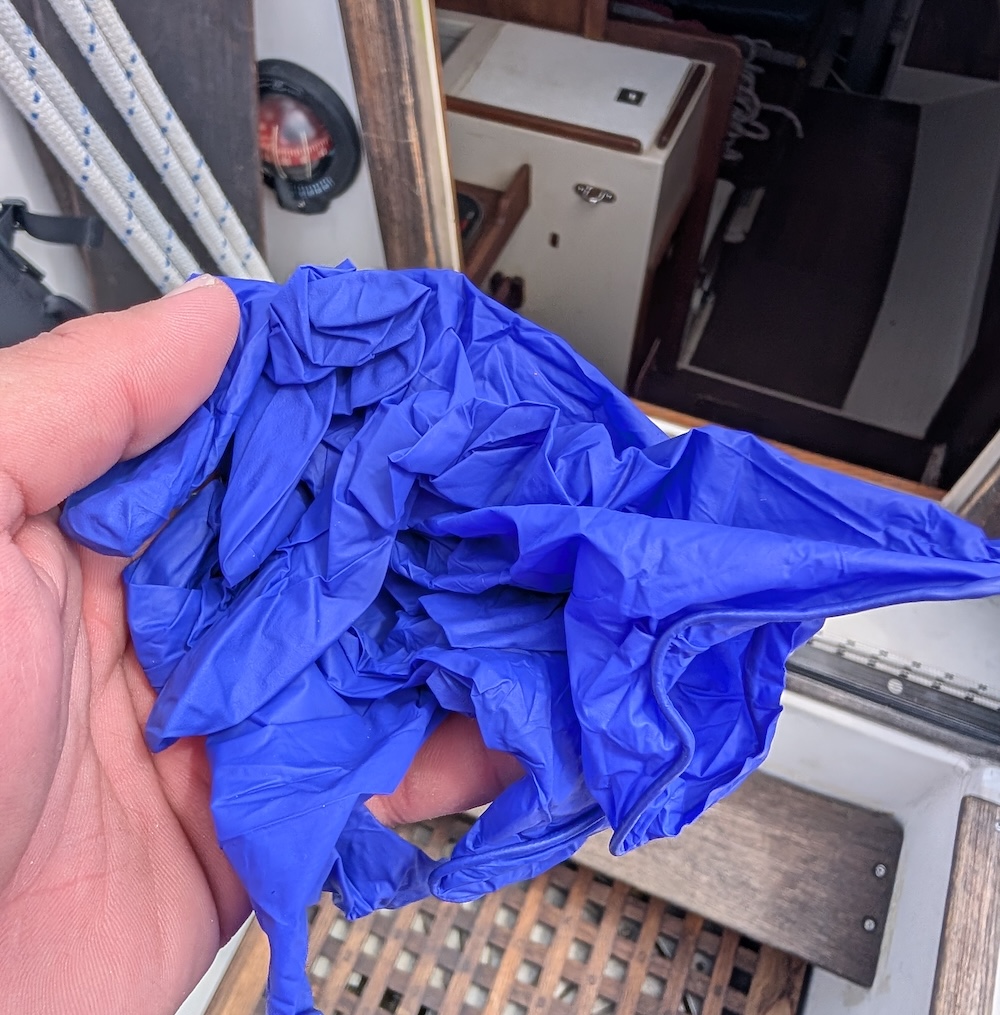
- Nitrile gloves;
- Some glue solvent (e.g. Goo Gone);
- Plenty of rags.
Technique
Removing the old caulking
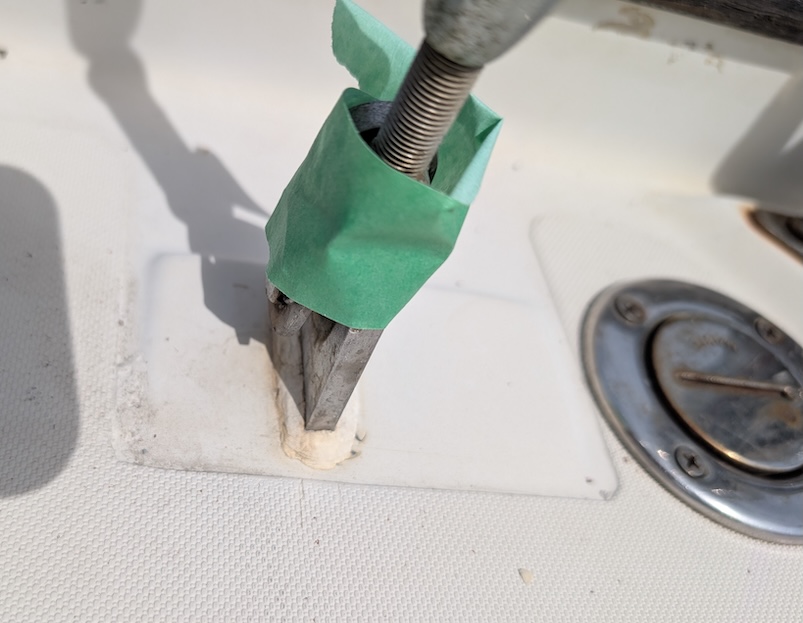
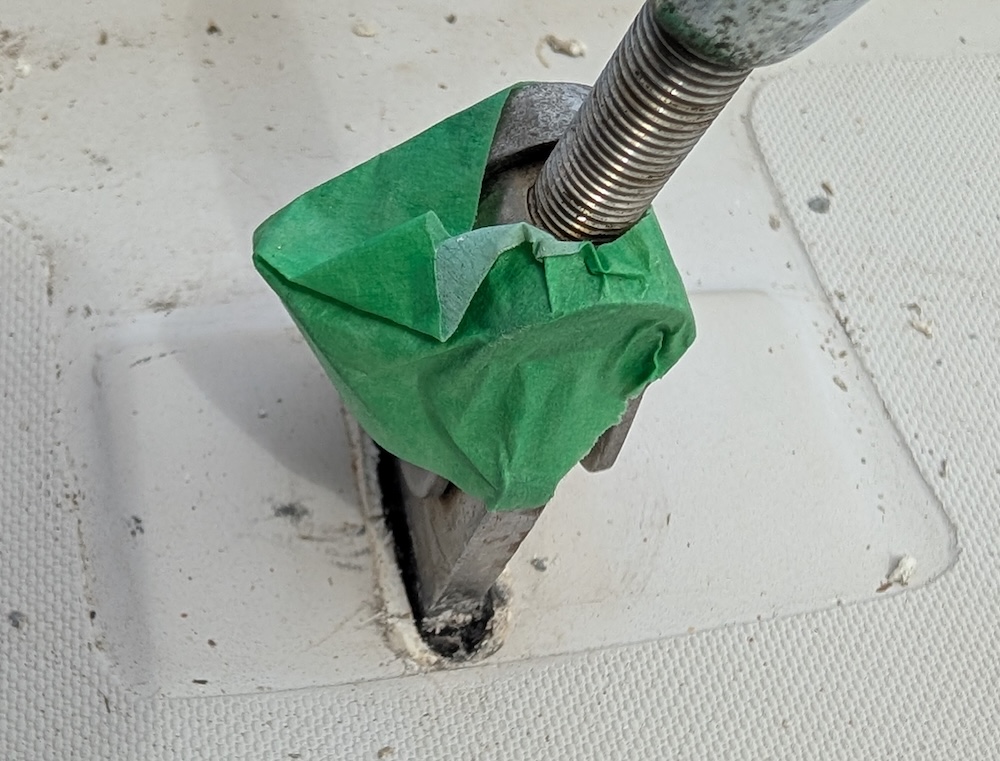
As for most work projects on sailboats, the longest part is preparation. Applying the new caulking takes roughly 20 minutes, but prepping the surfaces takes 2-3 hours (per boat).
The first step is to remove the old caulking. Roughly 90% of the caulking can be removed with the can opener. It works well for the caulking above the deck, but also between the deck and the chainplates (similar as how you would use a toothpick). The remainder of the caulking is removed with glue solvent, a brush and a plastic card, so as to properly clean the surface.
The second step is to clean the surface from glue solvent and small pieces of old caulking. This way, the new caulking will fully adhere to the surface.
Taping around chainplates
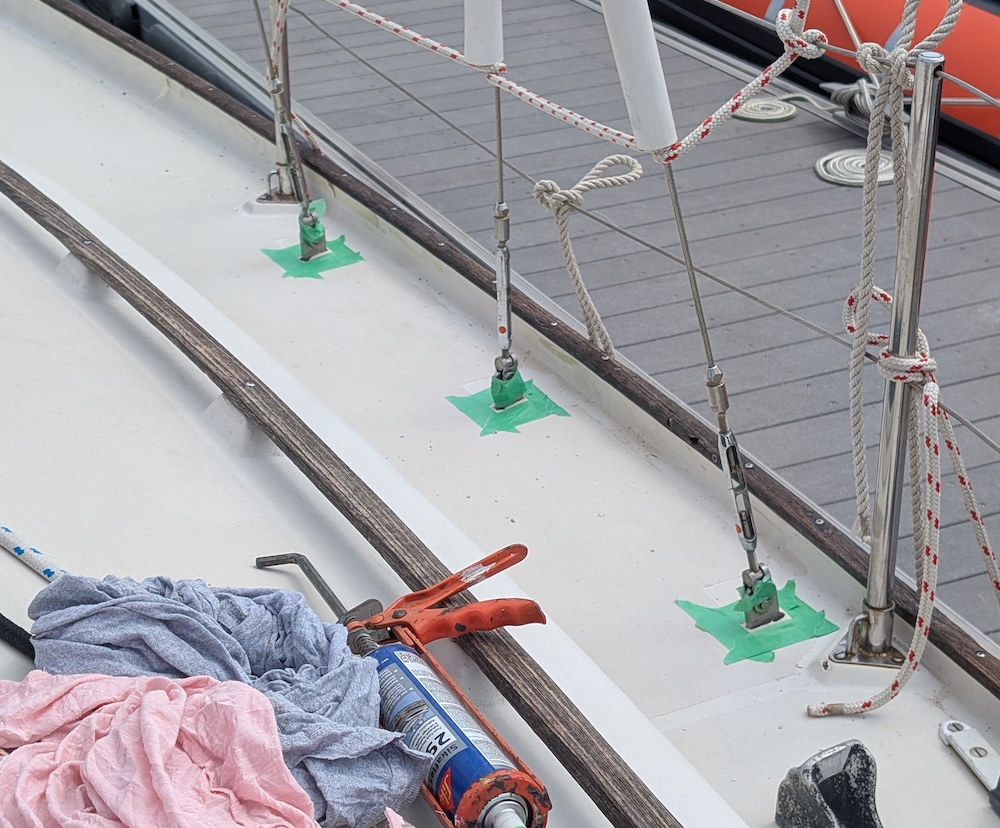
A big part of a professional finish is to use paint tape around the chainplates to limit the caulking applied. Once Sikaflex is applied, removing the tape will shape the sikaflex in a rectangle. Paint tape also prevents stains on deck.
Applying Sikaflex
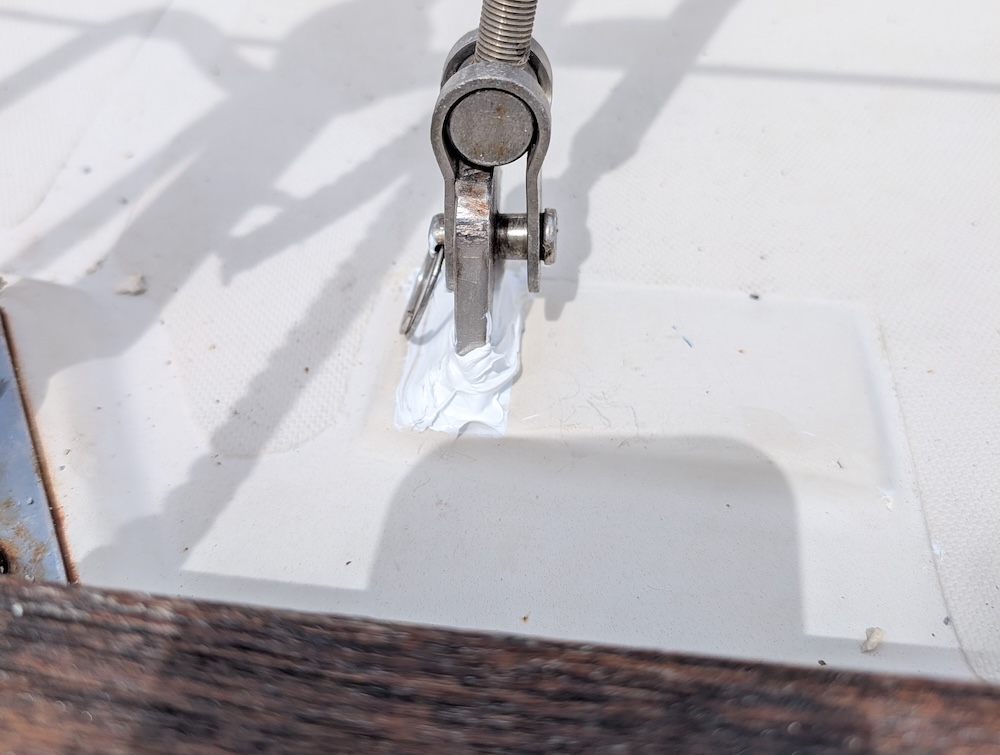
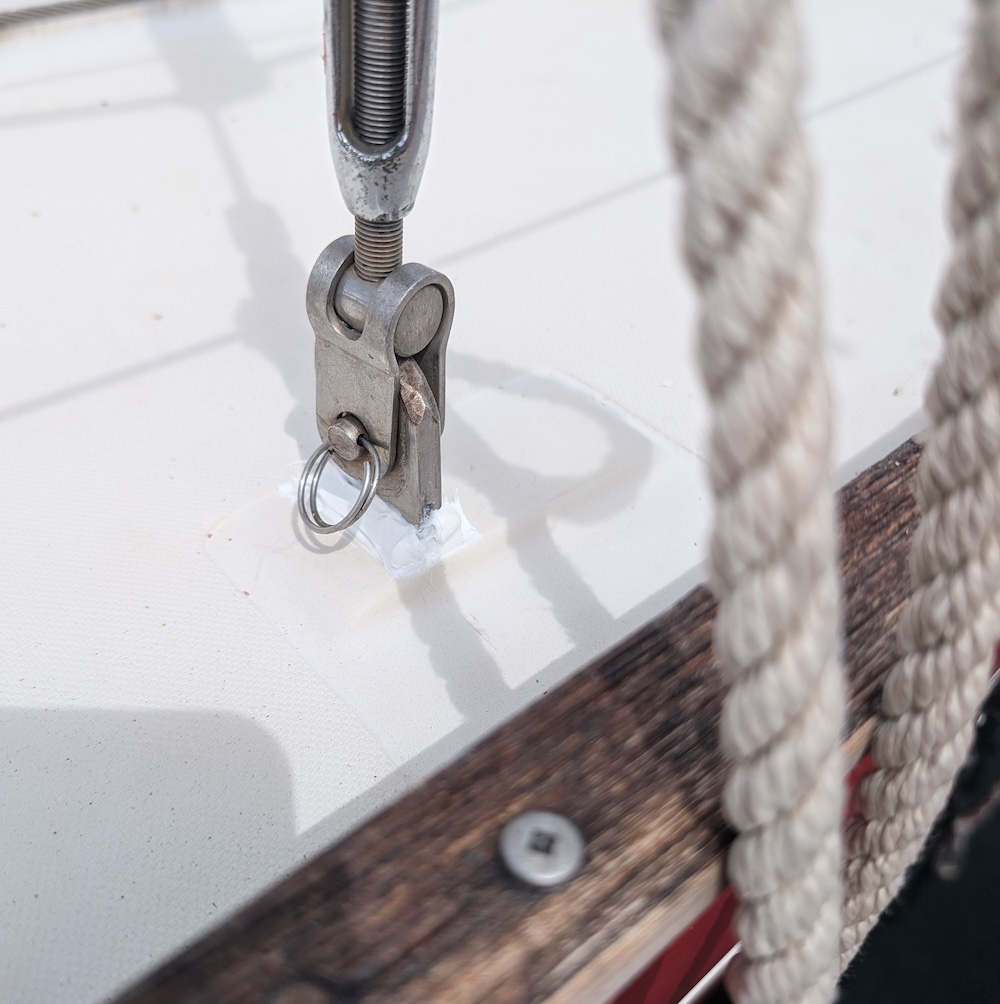
Sikaflex can be applied in two passes. The first past is rough, and should be molded in place with a finger (once wearing gloves). This guarantees that all surfaces are covered, and allows to push the Sikaflex between the deck and the chainplates. Once the job with the finger is done, its best to clean it with a rag to avoid staining the deck, chainplates, your tools, or yourself.
The second pass is applyied only with a the caulking gun, so as to create an extra bulge above the deck and around the plates. This garantees that water will not cumulate on the caulking.
Conclusion
Replacing the caulking around the chainplates when needed is a good safety practice. It prevents water ingress and water prolongs the life of chainplates.
The technique detailled above works well when the chainplates are in place. When the mast is off, another technique would be to remove the chainplates and then clean all the caulking accross the deck with a dremel tool. This can be done at the beginning of the sailing season.
Did you like this text? More can be found on maintenance in the section boatwork.