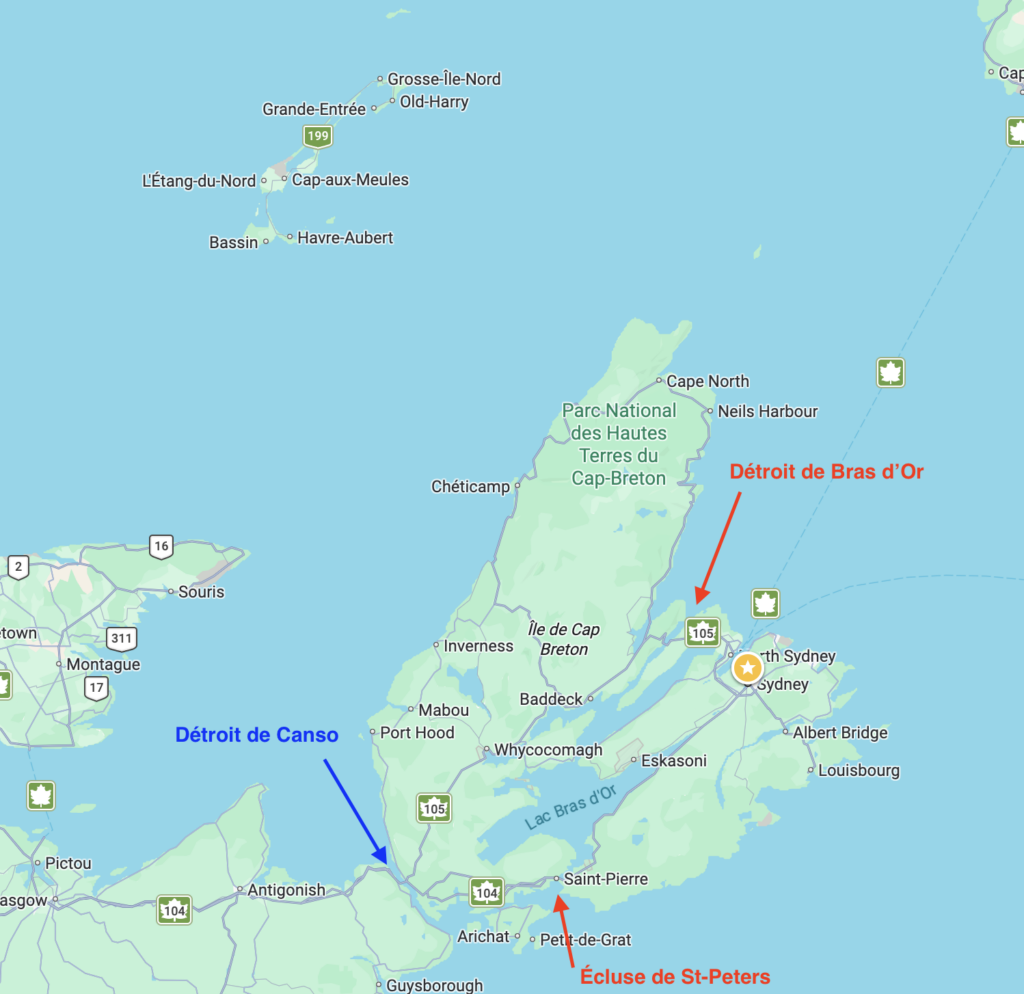
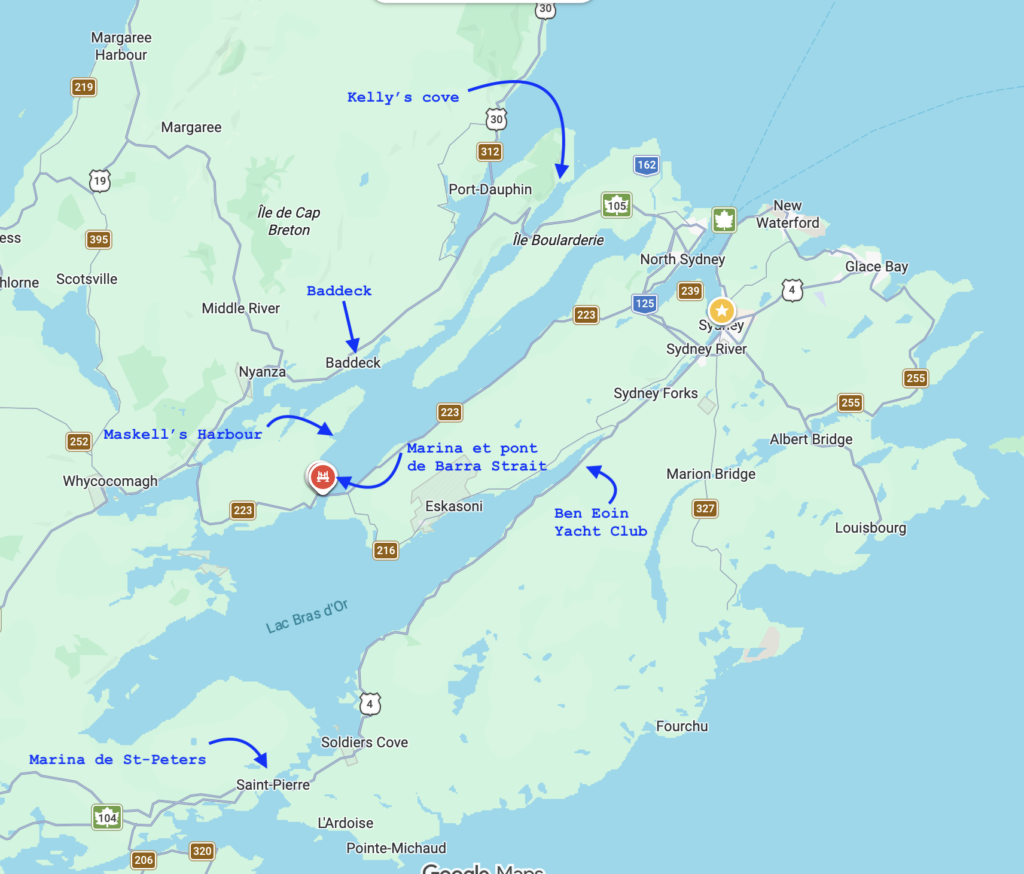
The Bras d’Or Lakes are inland lakes on Cape Breton Island, in Nova Scotia (picture below). I spent just under a week there whilst teaching intermediate sailing courses. Here I outline the key features that help you understand how to navigate them.
As Cape Breton Island is the result of a mix of French, Irish, Scottish and Mi’kmaq peoples, you will find villages and historic sites specific to each nationality. Depending on your cultural interests and the weather conditions, you can spend between four and ten days sailing there to explore various places and landmarks.
Although these are inland waters, the lakes are large enough to take into account fetch, swell and, more generally, weather conditions.
Navigation
The Bras d’Or is accessed from the south via the St Peters Lock. From the north, it is accessed via the Grand Bras d’Or Narrows.
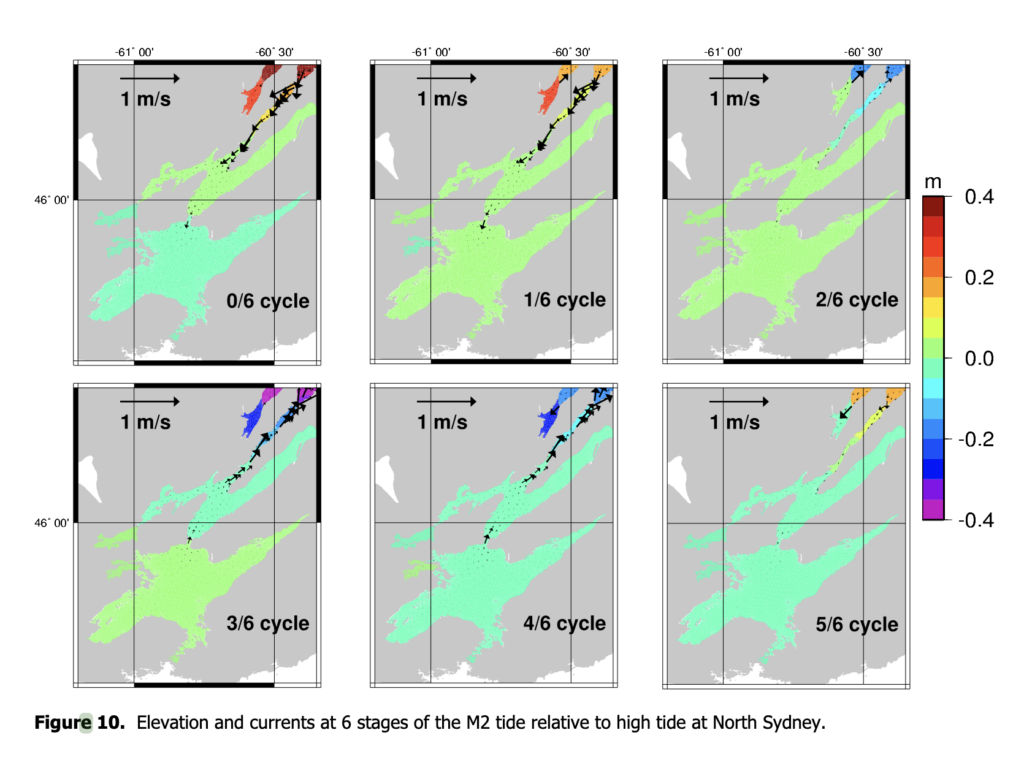
The Grand Bras d’Or Narrows is a tidal strait and is subject to strong tidal currents (see image below). Depending on the time of day and the phase of the moon, the currents can reach 4 knots. If you are planning to pass through, you will want to check the tide table to ensure that the currents are flowing in the same direction as you.
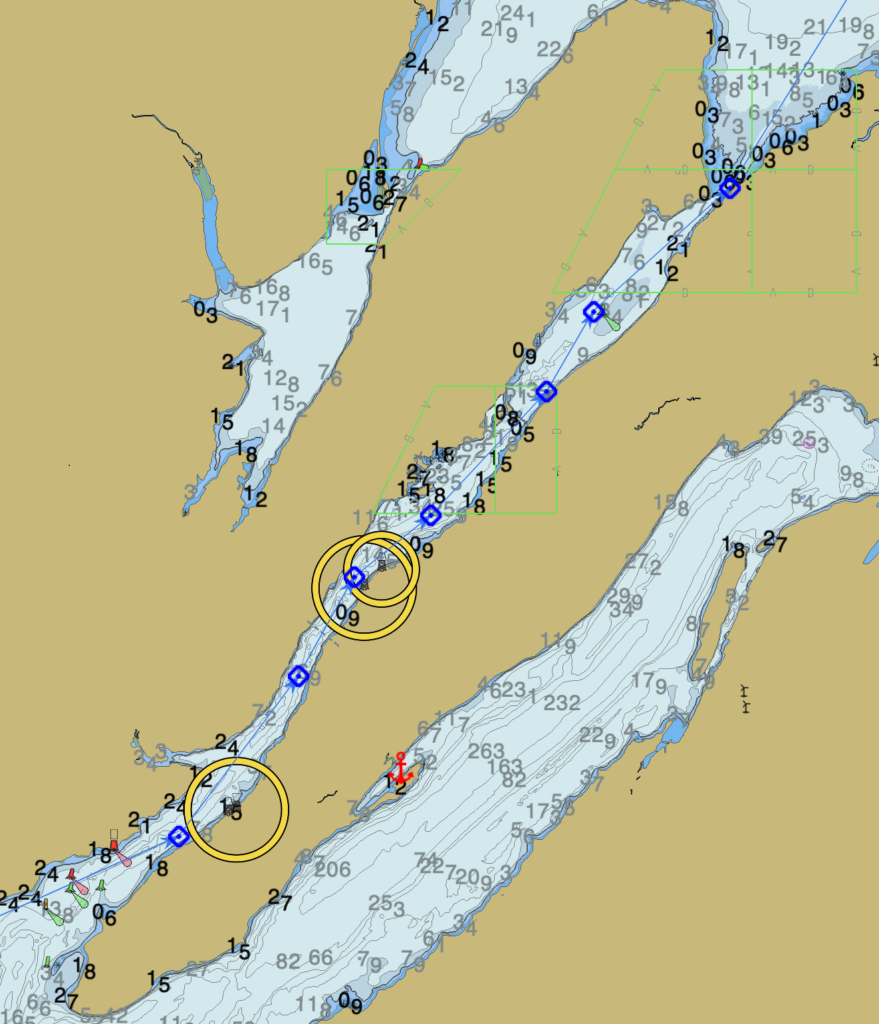
You should also pay attention to the fetch at the ends of the lakes and, more generally, to the prevailing winds. With prevailing south-westerly winds, the north-eastern end of Bras d’Or Lake can easily develop a swell of 2 to 3 metres. These same winds will make for a lovely downwind trip through the Grand Bras d’Or Strait. Conversely, if you are entering from the north, expect to double your sailing time, as you will have to tack for most of the day (image below).
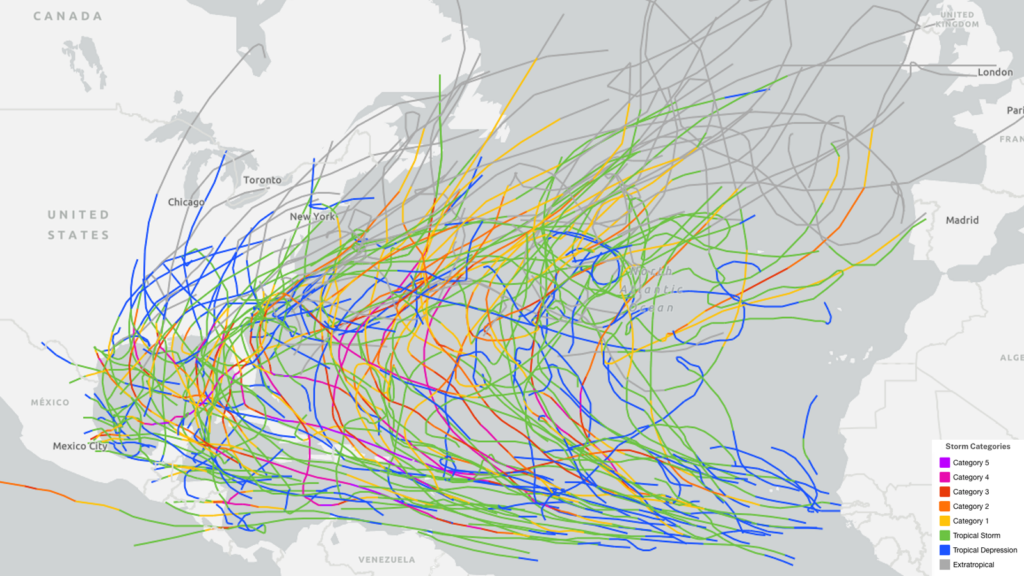
Finally, keep an eye out for low-pressure systems coming in from the US east coast. It doesn’t have to be a hurricane for the weather to deteriorate significantly on the lakes. A substantial low-pressure system can generate winds of 40 knots even in inland waters.
What should you read to prepare for your sailing trip?
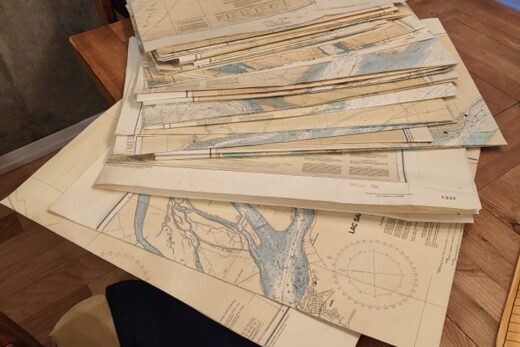
- The nautical instructions remain a good general guide for identifying the main anchorages and marinas.
- The tide and current table for planning your passage through the Bras d’Or Strait.
- Information on the St Peters locks.
- This mini-cruising guide, dating from 2009, remains generally reliable.
Crossing the Barra Straight Bridge
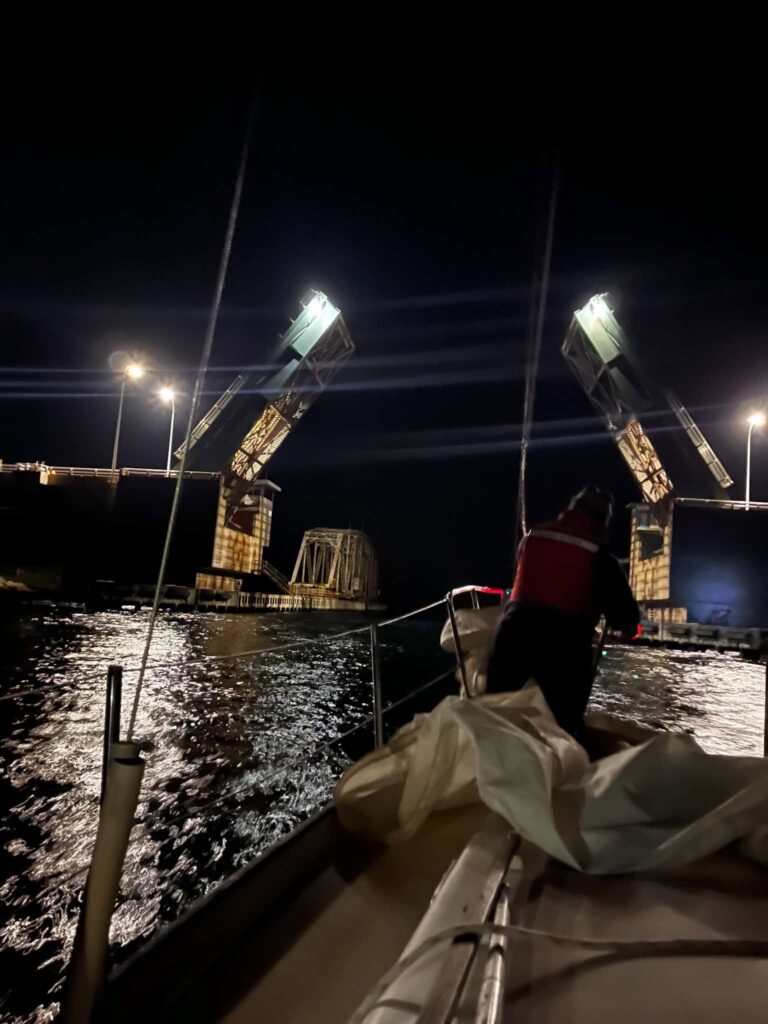
The passage between the Petit Bras d’Or and the Grand Bras d’Or requires passing under the Barra Strait Bridge. It is a bascule bridge. You can contact them on VHF channel 10. They also monitor VHF channel 16.
Opening the bridge takes a few minutes. Therefore, calling them 10 minutes in advance is more than enough. In season, the bridge is open every day, at all hours.
Depending on the wind direction, wave conditions will vary significantly from one side of the bridge to the other. If you cross to the south, you’ll go from calm waters to a heavy swell when there’s a sou’westerly wind, mainly due to the fetch. It’s incredible, because the difference from one side to the other is less than 20 metres! The sailing conditions will certainly be very different.
Main stops and anchorages
Kelly’s Cove
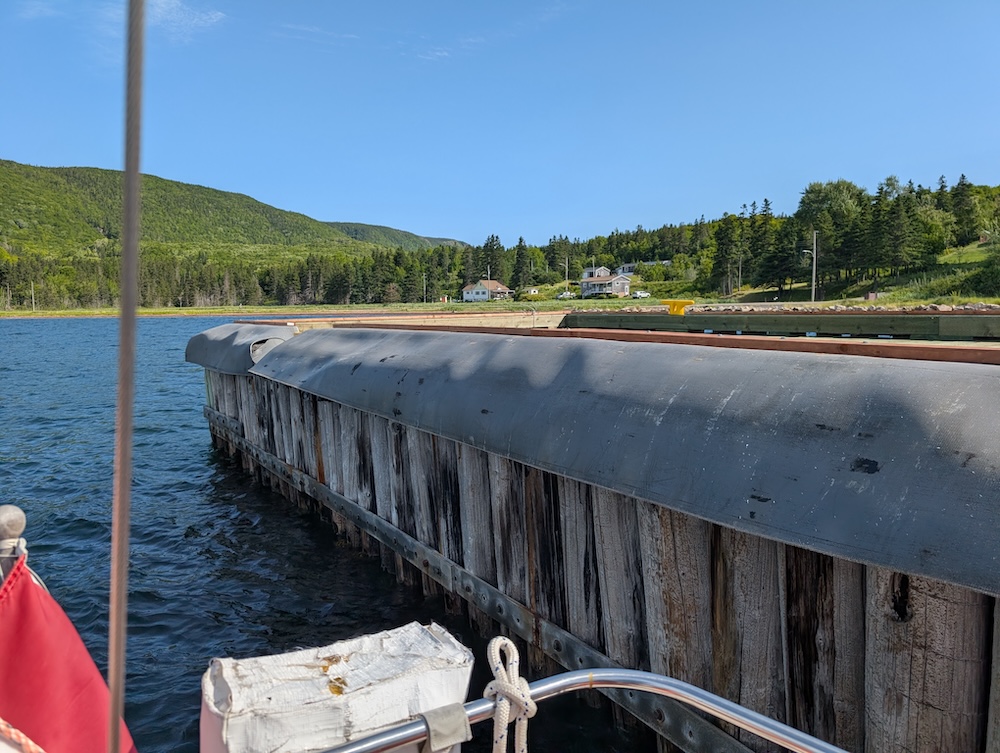
Kelly’s Cove is just on the other side of the Grand Narrows. We entered from the north and had to pass through the strait at 2300 (local time) to take advantage of the currents, so we dropped anchor immediately after passing through to spend the night there. There is a well-sheltered bay with a depth of 3 metres.
If you’re lucky, the jetty at Kelly’s Cove will also be accessible (and you’ll need to pay a mooring fee). There’s a toilet block and a waste disposal point.
You might be able to pop into the holiday camp situated right next door. You may have access to the showers, but you’ll have to put up with its Christian religious character.
Baddeck
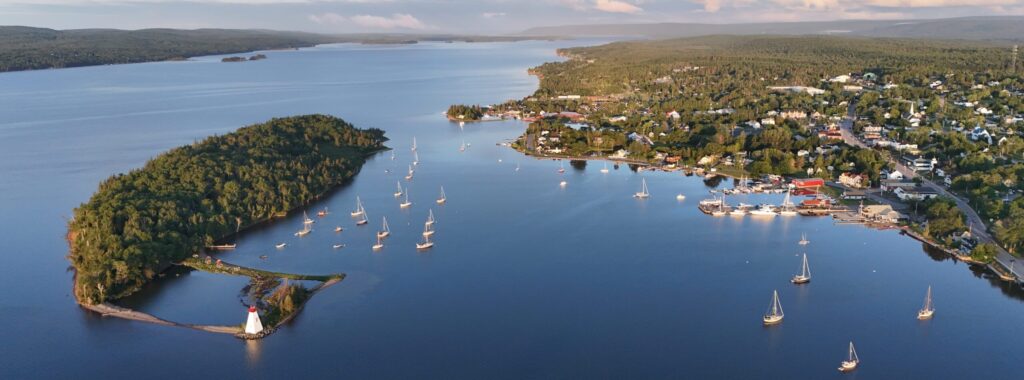
Baddeck is the sailing hub of the Bras d’Or Lakes and the cultural centre of Cape Breton. This is where you’ll find organised sailing regattas, as well as around fifty lockers available for sailing boats.
You can do your shopping, have your laundry done, go to a restaurant, and carry out minor repairs thanks to the presence of parts suppliers. You should allow a good two days – ideally a weekend – to get a decent look around the area.
It’s also your gateway by road to Chéticamp, Cape Breton’s main French-speaking town. Chéticamp is a superb town that I visited whilst travelling through Nova Scotia, but from Baddeck, you’ll need to plan a day trip.
Coffee snobs like me will make a point of stopping off at the Highwheeler Café. Pizza lovers will want to pop into Tom’s Pizza, which also makes for an affordable family outing. Finally, for a chic, quintessential marina dinner, head to the Freight Shed – it’s hard to miss at the start of the public quay and is reminiscent of Café du Monde in Québec City.
It’s also worth checking out what events are on: festivals, regattas or tournaments. If you’re lucky, you’ll stumble upon an event that becomes the highlight of your trip.
Maskell’s Harbour
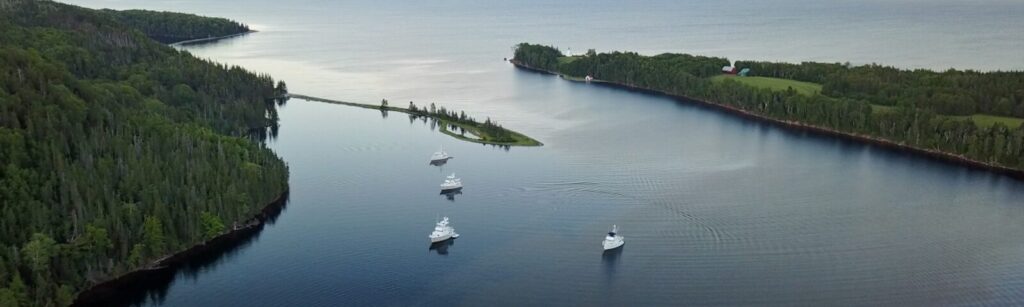
Situated between Baddeck and the Barra Strait Bridge, Maskell’s Harbour is the ideal spot for an afternoon’s swim or to spend the night. In the afternoon, you’ll have to share the space with a few noisier boats. The natural harbour is very well sheltered on all sides, ensuring a comfortable evening and night’s stay. The spot is completely cut off from civilisation.
The Barra Strait Marina
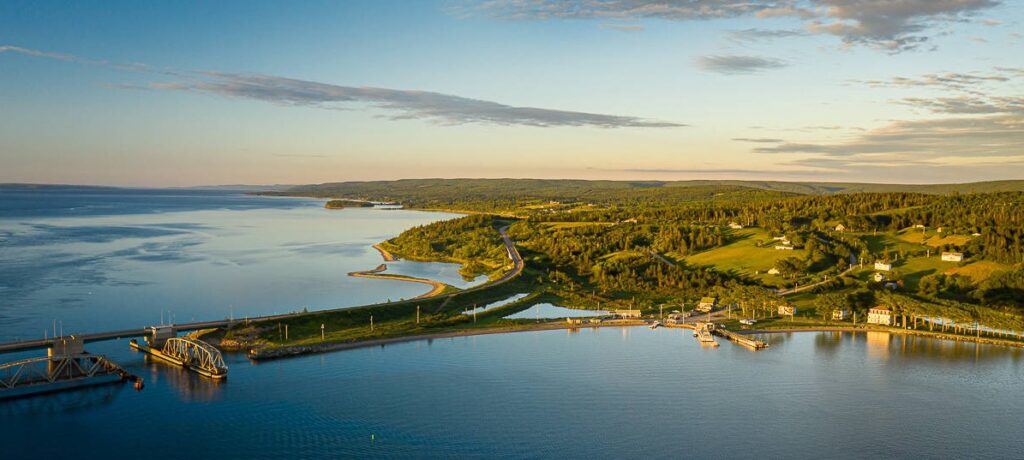
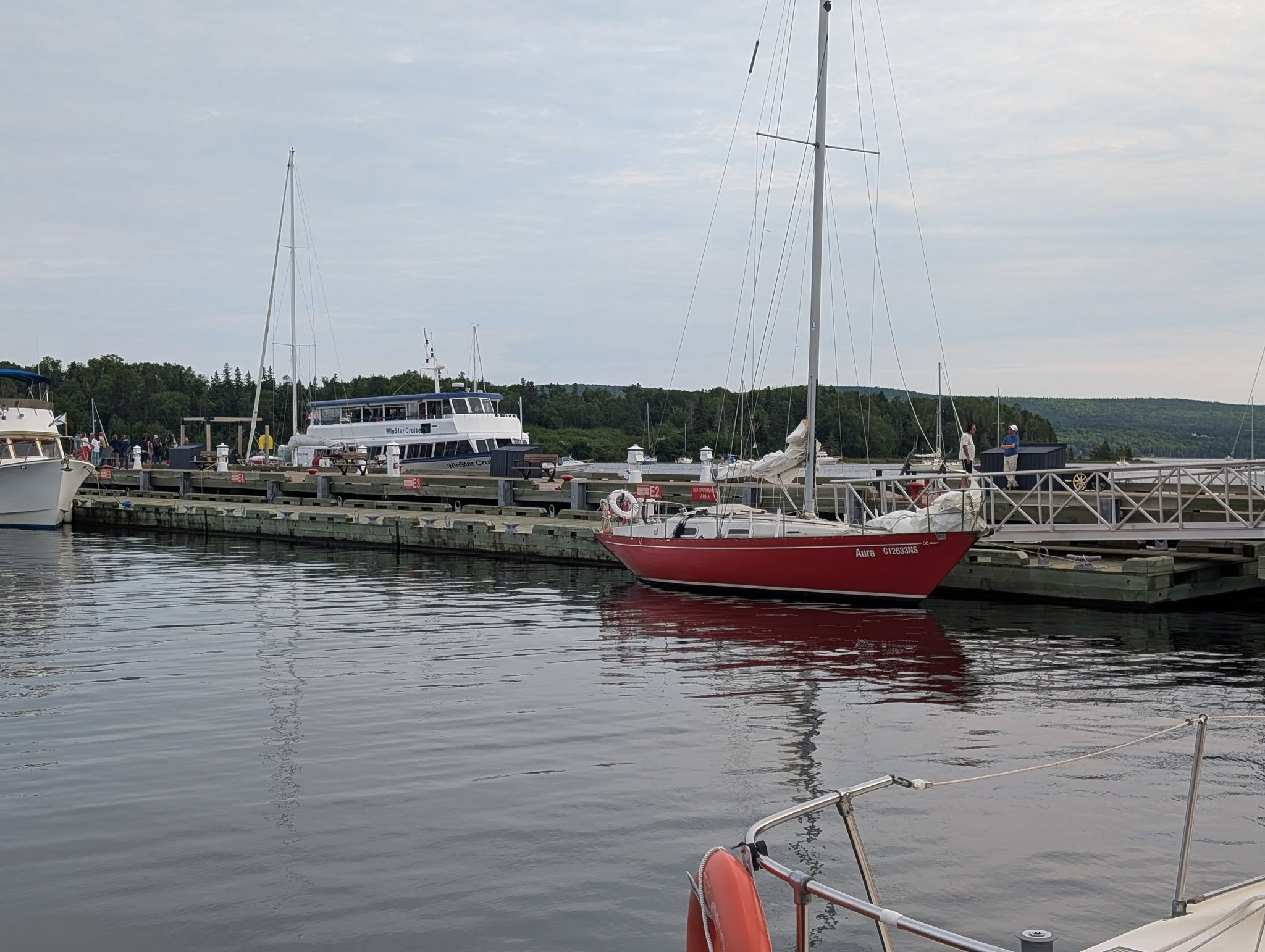
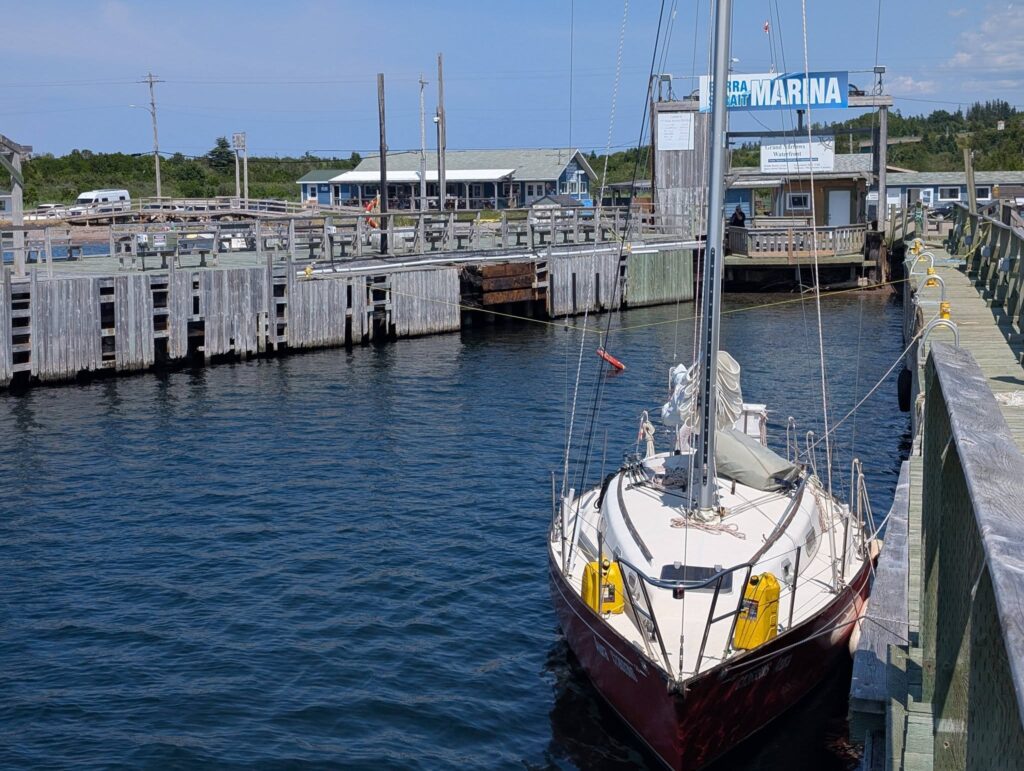
The Barra Strait Marina … isn’t really a marina. It’s a former ferry quay where you can moor without any difficulty (picture below). You can stop off for dinner and visit the Wheelhouse Café, which serves excellent ice cream. You can easily spend the night there if you wish (rates unknown), to make use of the toilets and possibly the showers. You can also cross the bridge and visit Iona. There’s a small maritime heritage centre there which is well worth a visit on a windless afternoon. Alternatively, you can cross the Barra Strait bridge and spend the night at Iona’s public jetty. In bad weather, whether you sleep on one side or the other of the bridge will largely depend on the direction of the swell.
Ben Eoin Yacht Club
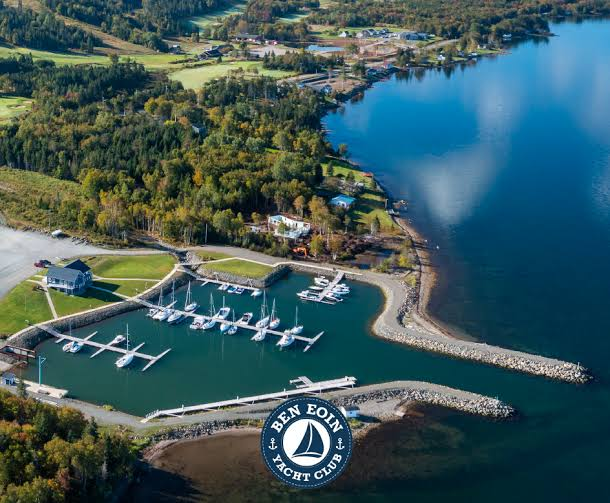
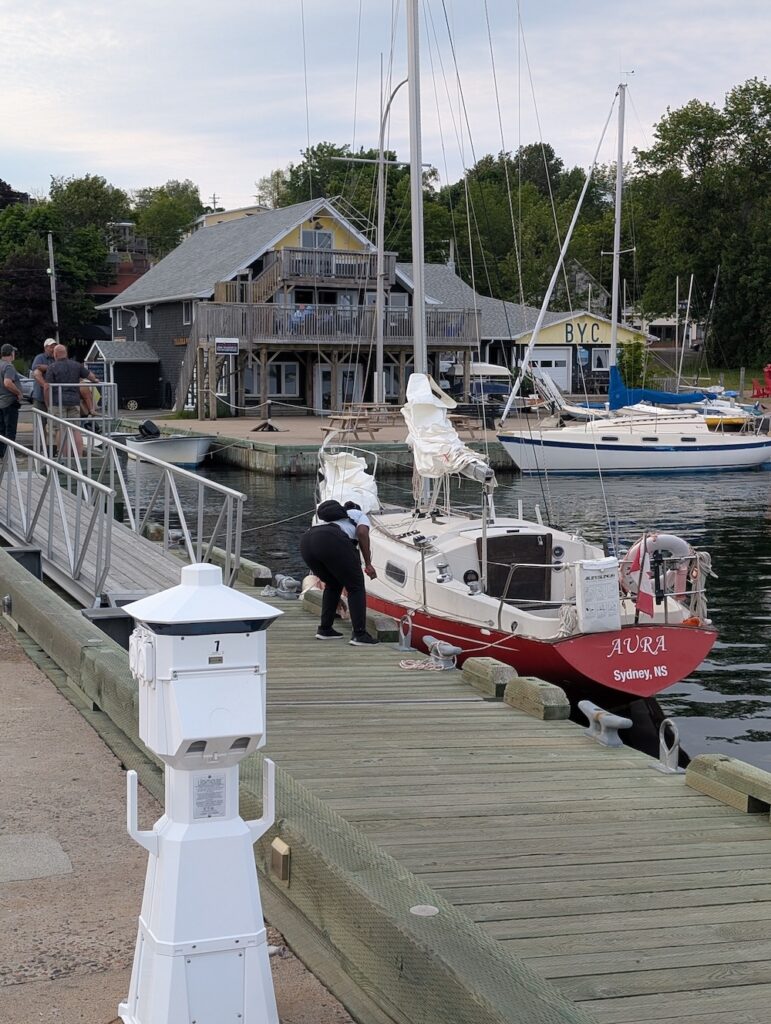
The Ben Eoin Yacht Club ( which means ‘John’s Mountain’ in Gaelic) is the most upmarket sailing club in the whole region. You can make use of the on-site bar and restaurant, as well as the showers and washing facilities.
If sailing across the Atlantic Ocean isn’t for you, this is the ideal place to leave your yacht and visit the city of Sydney and Louisbourg Fortress by car. However, you’ll need to arrange transport from the club to the nearest car hire company (about 30 minutes away) and allow at least a day for the visit.
Their website states that they monitor VHF channels 16 and 10, but in my experience it’s best to ring them by phone in the late morning.
St Peters Marina
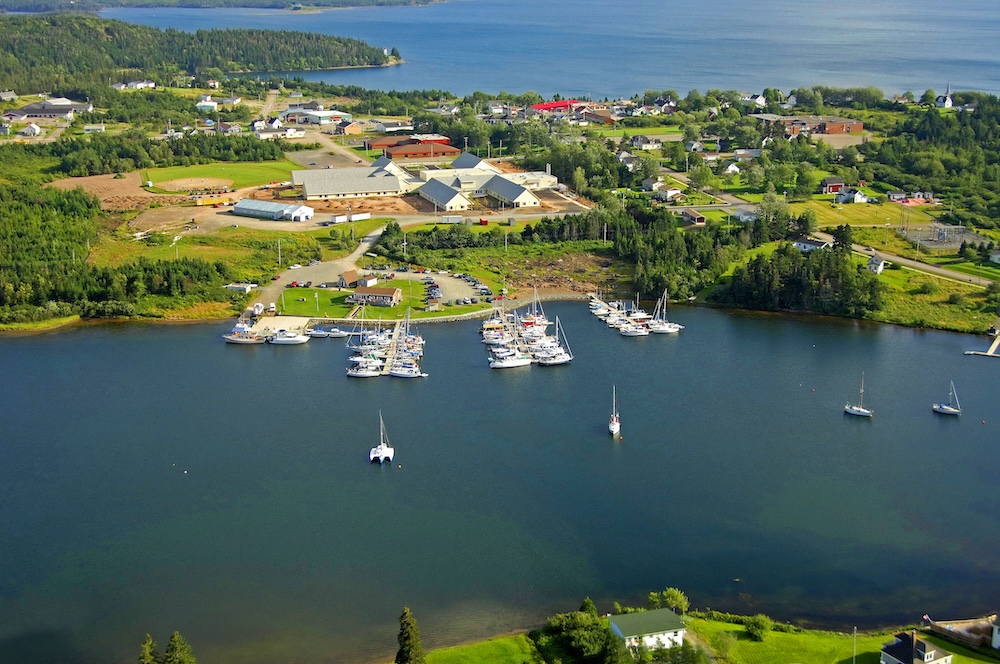
St Peters Marina is right next to the village, so you can pop in to do your shopping. You can fill up with diesel or petrol, have a shower or do your washing there. If you want to wait for favourable conditions before or after passing through the lock, this is the ideal spot.
Conclusion
If you ’re sailing to the Magdalen Islands, consider allowing an extra 7–10 days to enjoy the Bras d’Or Lakes. It’s an ideal opportunity to meet up with friends who are touring the Maritime Provinces (by car), or simply a chance to explore a new and relatively safe sailing area. A stop in Baddeck is a must. The rest depends largely on your interests and how long you have to spend at anchor, leaving civilisation behind for a few hours.
This text details a few ideal places to stop off, but there are plenty of other jetties and harbours of refuge. By reading the nautical instructions, you can find a few other interesting anchorages, such as those near Otter Island and the Indian Islands. I haven’t tried them myself, but they’ve been recommended to me.