Astronavigation

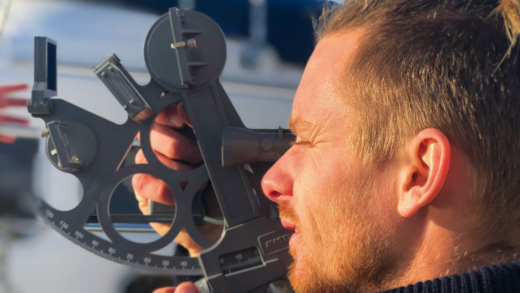
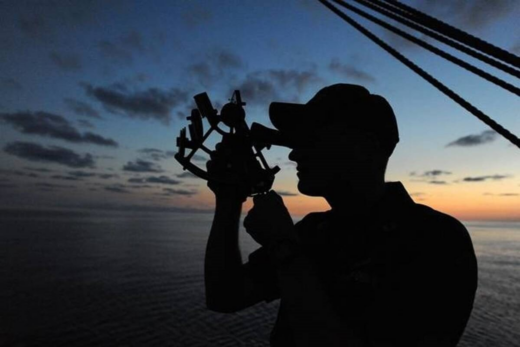
Un navigateur qui fait un relevé au sextant.

A free celestial navigation course

This series of twelve articles explains the techniques required for celestial navigation. They include examples and practical applications, enabling you to learn through exercises. Beforehand, you should be comfortable with the basic calculations used in navigation. In particular, you need to have a good understanding of coordinate systems and know...
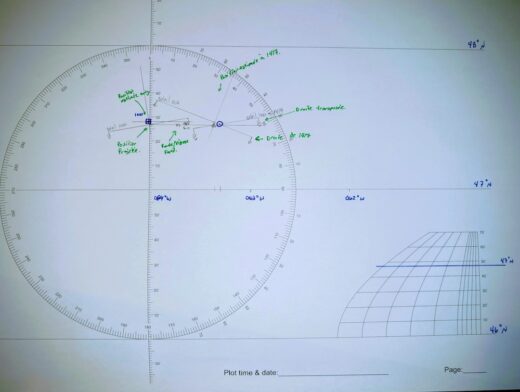
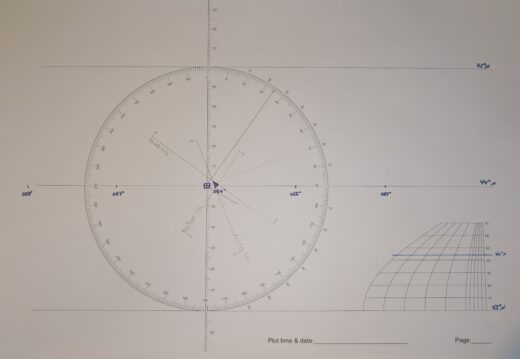
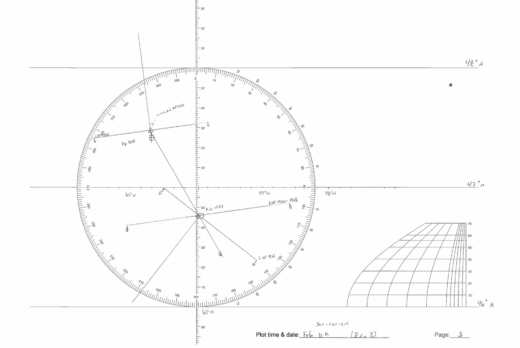
Un sun-run-sun.

Application: the sun-run-sun technique

This text is the last in the series on celestial navigation. It applies the material developed in the previous texts to determine a position from two observations of the sun. In English, this technique is known as a sun-run-sun. In addition to astronomical navigation techniques, it draws on the concept...

L'exercice couvert dans cette page.

Application: a complete star sight

This text is the tenth in the series on celestial navigation. It covers how to convert three star sightings into three position lines, enabling you to determine your position. All the knowledge required to carry out this work has already been covered in the other texts. The challenge of this...

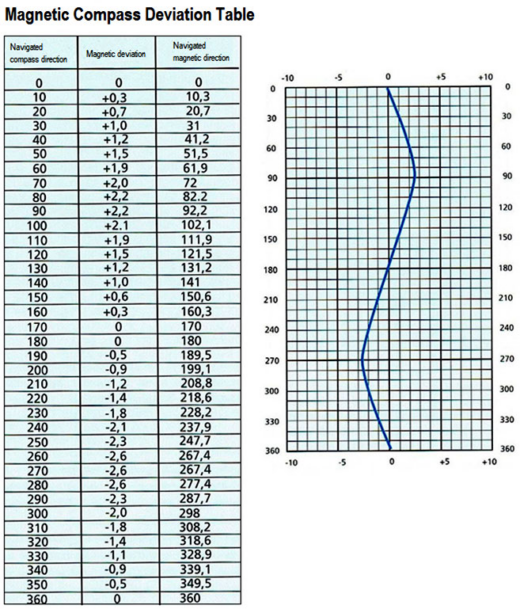
Table de déviation magnétique.

Application: finding the compass deviation

This eleventh text in the series on celestial navigation covers the use of solar observations to determine the compass deviation associated with a course. In addition to the first six texts in the series, some prior knowledge of basic coastal navigation is required. In particular, you should be familiar with...

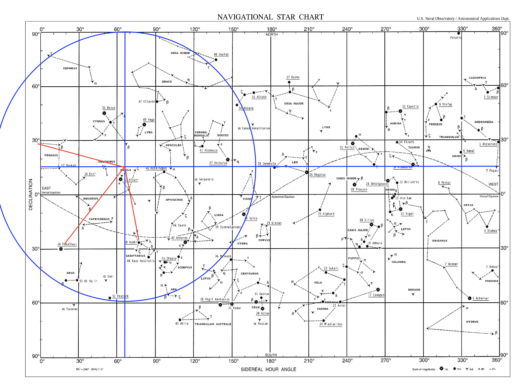
Un plan de relevé astronomique sur une carte du ciel.

How to plan your star sights

This is the eighth in a series of articles on celestial navigation. It answers a key question: when should you take your celestial observations and which stars should you choose? To observe stars or planets, it must be bright enough to see the horizon, but dark enough to see the...

Application: performing a noon sight

This article is the ninth in a series on celestial navigation. It explains how to take a noon sight. Before reading this, you should have a good grasp of the first six theoretical articles. To take a noon sight, you need to: The noon sight is the astronomical navigation technique...

Tracer des lignes de position est la partie facile de la navigation astronomique.

Plotting celestial lines of position

This seventh article in the series on astronomical navigation focuses on plotting position lines. This is the easiest part – and usually the last – of a positioning exercise. To do this, you will of course need a specialised sheet of paper for your plots, a parallel ruler and a...

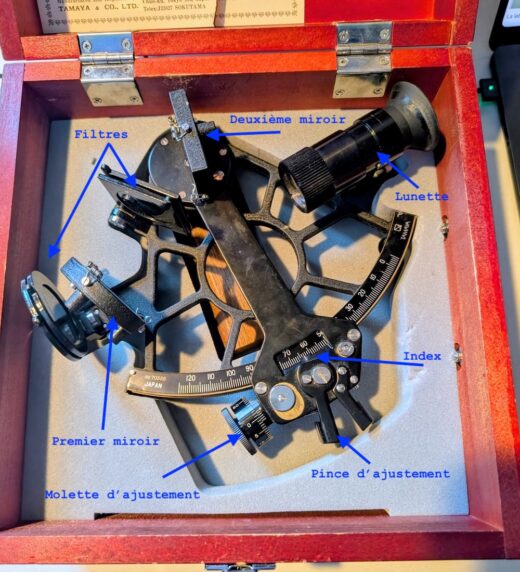
How to do and read sextant sights

This is the third in a series of articles on celestial navigation. It focuses on the use of the sextant. Specifically, it covers how to: Taking a sextant reading is the most practical part of celestial navigation. It is also the most romanticised, the most frequently depicted in images and...

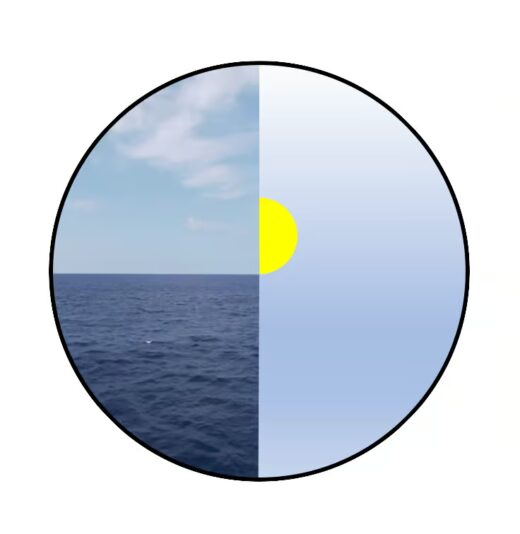
La partie inférieure du soleil.

Corrections to sextant sights

This text is the fourth in the series on astronomical navigation. It deals with the corrections to be made to observations taken with a sextant. The text on how to take observations with a sextant should be read first. For reasons that will be explained later, the observed altitude of...

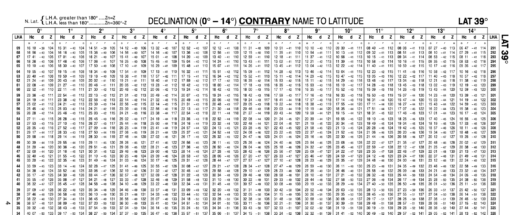
Sight reduction exercices (with tables)

This text contains sight reduction exercisesusing the Ho 249 reduction tables. Beforehand, you should read the text on sextant observation reduction or, more generally, the series of texts on celestial navigation. Exercise 1 Your estimated position is at 50° 18.7’N / 058° 23.89’W at 1825 UTC-3.5. The observed altitude of...