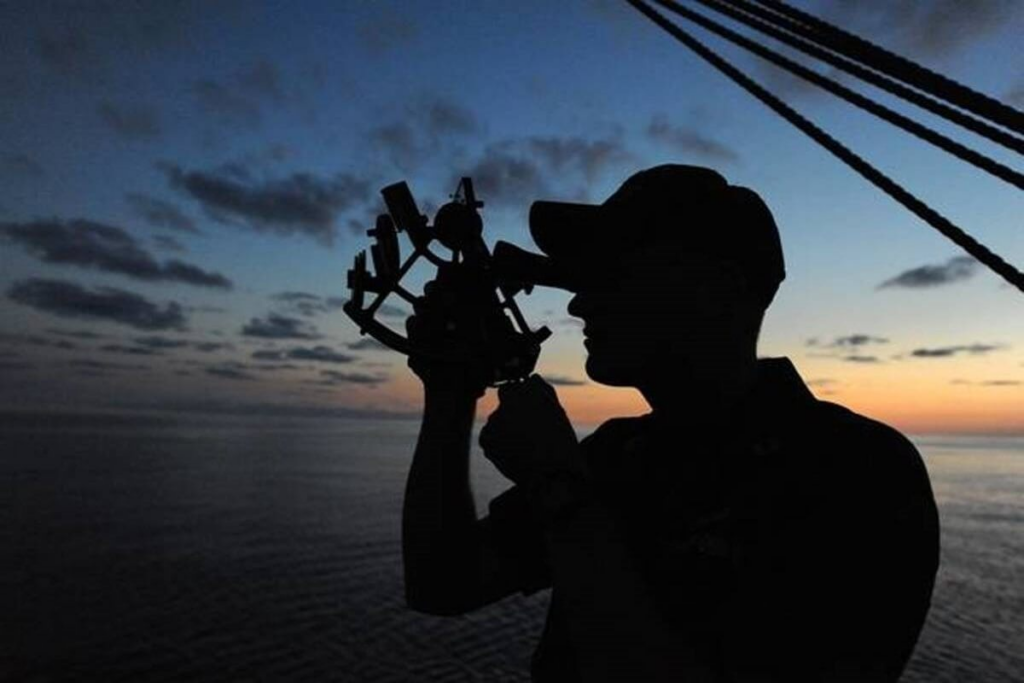
This series of twelve articles explains the techniques required for celestial navigation. They include examples and practical applications, enabling you to learn through exercises. Beforehand, you should be comfortable with the basic calculations used in navigation. In particular, you need to have a good understanding of coordinate systems and know how to add or subtract coordinates measured in degrees, minutes and seconds.
The theory of celestial navigation can be grasped in an hour or two. The concepts are simple. After reading the second article, you will understand why the technique works.
Applying the technique, however, requires calculations and, as a beginner, a great deal of patience! If you’re not naturally good at maths, it’s easy to make mistakes. You must first take your time; then, once you fully understand the process, think about doing things more quickly.
It is best to read these texts in order. However, after the text on identifying the meridian of a celestial body, you can carry out the first application, namely calculating thenoon sight.
Did you enjoy this series? You can read more in the Learn section of this site.

14 Responses
[…] Astronavigation […]
[…] Astronavigation […]
[…] Astronavigation […]
[…] Astronavigation […]
[…] Astronavigation […]
[…] Astronavigation […]
[…] Astronavigation […]
[…] Astronavigation […]
[…] Astronavigation […]
[…] Astronavigation […]
[…] Astronavigation […]
[…] Astronavigation […]
[…] Astronavigation […]
[…] Astronavigation […]