Astronavigation

Spherical triangle exercices (with formulas)

Here is a series of five reduction exercises based on sextant observations, using spherical trigonometry. To understand how to complete these exercises, you will need to have read the text on reducing sextant observations or, more generally, the series of texts on celestial navigation. Exercise 1 Your estimated position is...
Spherical Triangles and Sight Reduction

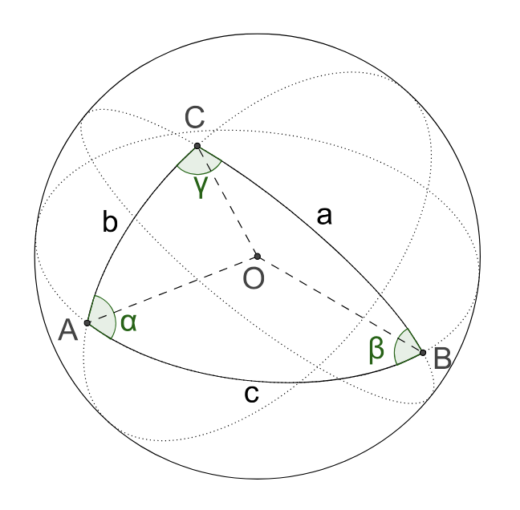
This text is the sixth in a series on celestial navigation. It focuses on the method for converting sextant readings into a position line, i.e. a reduction of sextant observations. The text explaining how to find the GP of a celestial body should be read beforehand. The reduction is the...

Finding the GP of a Celestial Body

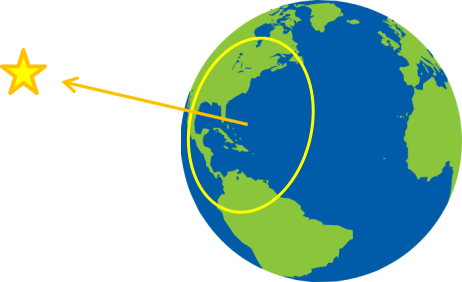
In developing a theory of celestial navigation, we have seen that a ship’s position is determined using circles of position centred on the GP of a celestial body. This fifth article in the series on celestial navigation shows how to find the GP of any celestial body. This is an...

The theory of Astronavigation

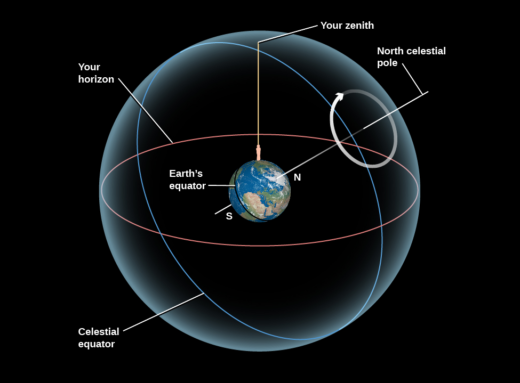
This is the second in a series of articles on celestial navigation. It sets out the theory needed to understand how the technique works. The focus is on understanding, rather than calculation: we’re looking at the big picture. No calculations! The idea is to understand the simplifications required to arrive...

Astronav: essential tools and documents

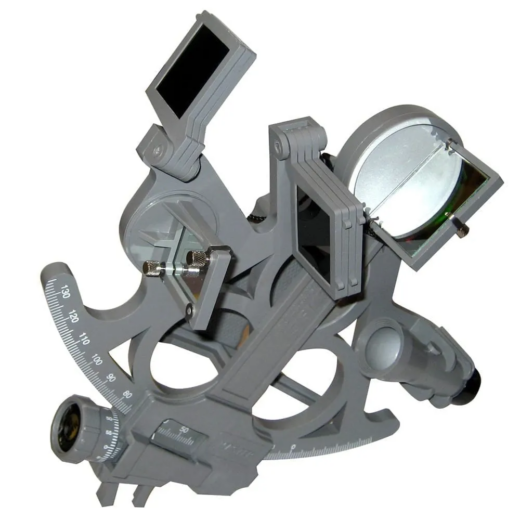
This is the first in a series of articles on celestial navigation. It covers the tools and documents required for celestial navigation, namely: You don’t need anything else. A basic scientific calculator with trigonometric functions (sin, cos, tan, etc.) costs around $20. A ruler costs next to nothing, but it...